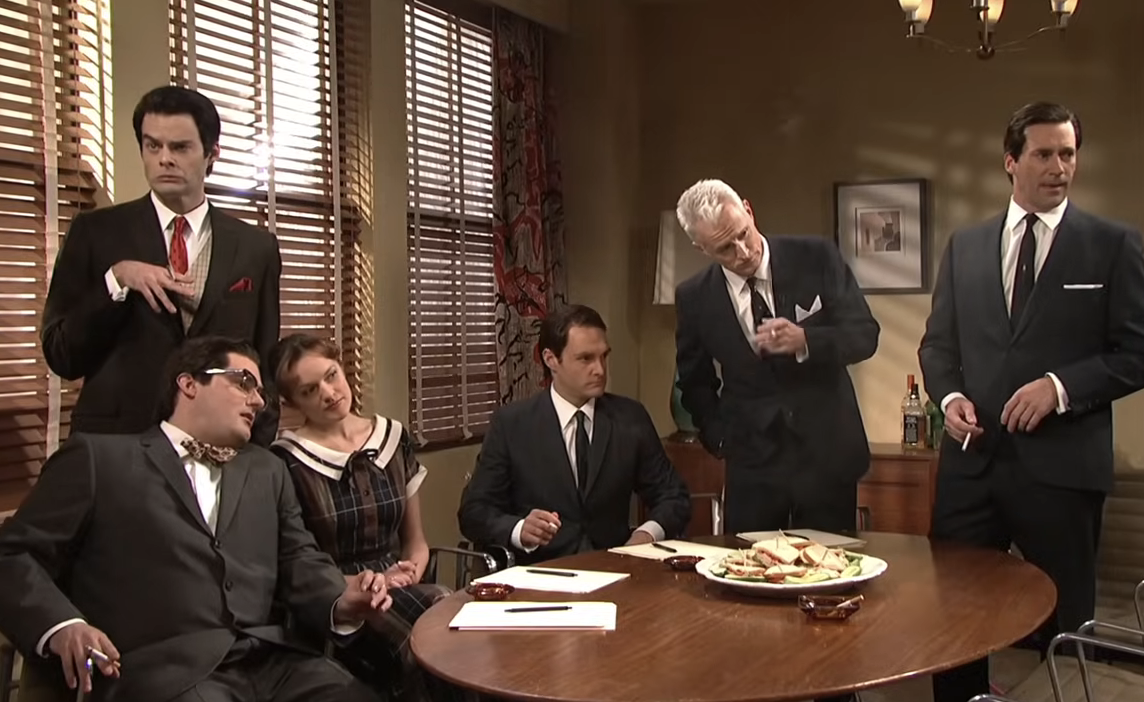
I watched the show week to week while it was on the air, but I never rewatched it once. There was just so much going on with this show, and it was so rich. They truly do not make things like this anymore. And they probably never will again.
I am going to warn you. I do not conform to Hollywood math that says Mad Men, Breaking Bad, and The Sopranos had two-part final seasons. That is nonsense designed to pay workers less. This show ran for eight seasons and no one can tell me differently.
8. Season 1: “What you call love was invented by guys like me…to sell nylons.”
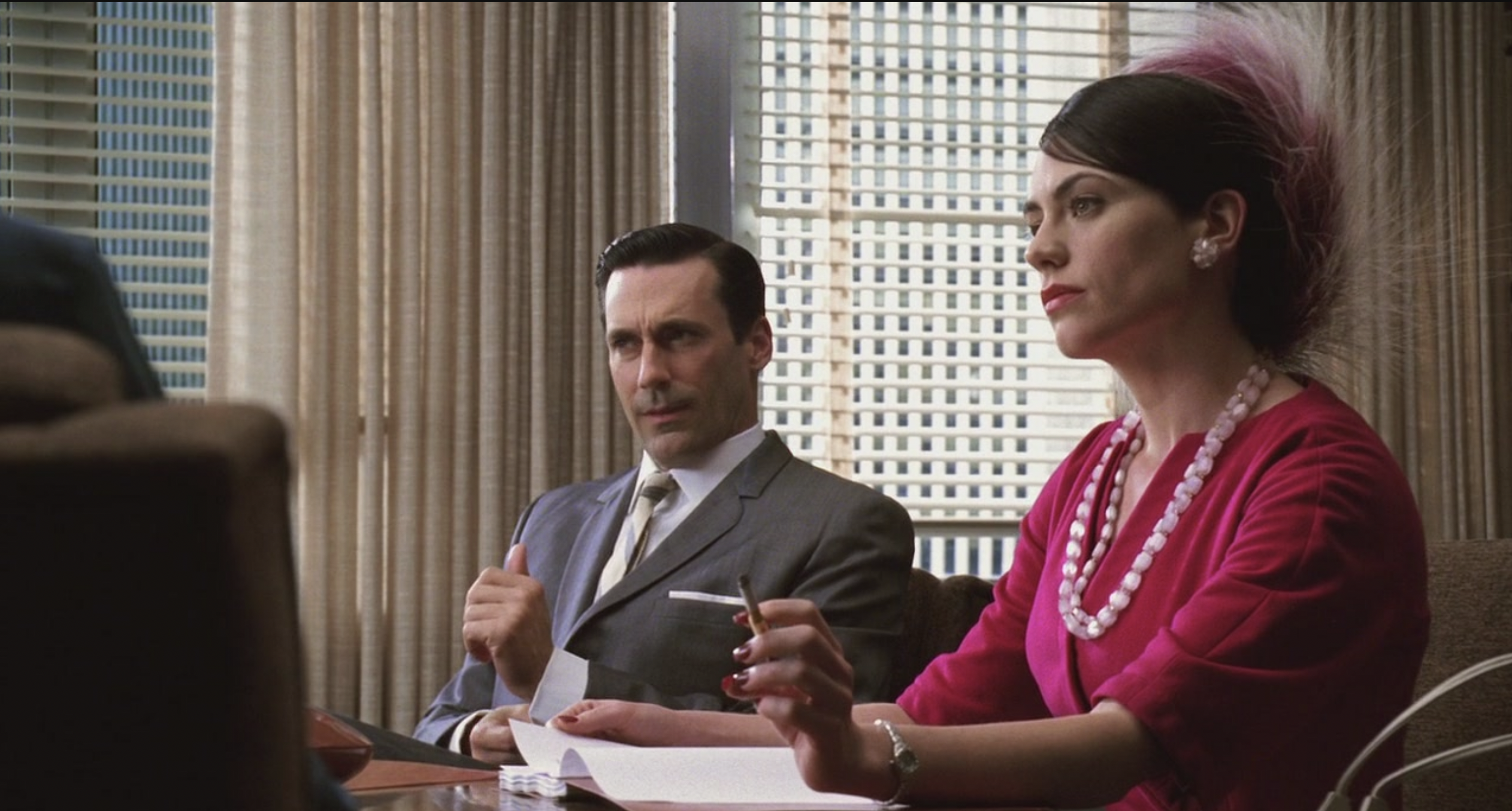
Season one was just fascinating to revisit on a number of levels.
Don: Don is just so YOUNG in this season in a way that I did not realize. He is immature. He is married to someone whom he has no substantive connection with. He’s seen as a god by a gang of idiot underlings. He’s presented as the golden child by his superiors and talked up by his clients.
And there’s nothing really objectively interesting about this selfish man with a job that makes the world a worse place. He mistreats everyone around him who has less power than him; he does not have ambitions except to be a shark and just keep swimming. You maybe empathize with him because it’s clear he had a rough childhood. But especially for the first 9-10 episodes, it was stark how uninteresting of a human being he was in almost every way. He was a pretty face.
Politically: This show was in some ways its most assured when it comes to the political POV. This advertising company objectively is a part of the worst consumerist-centered aspects of society, is filled with Richard Nixon supporters and conspirators, tries to support the Israel government, and, in a blink-and-you-miss-it-moment, is revealed to do advertising for the UNITED FRUIT COMPANY.
Thematically: This show really is about how so many humans push down the most interesting things about themselves in order to thrive in the hyper-competitive and individualistic culture and society that the United States has fostered.
That idea comes together most coherently in the late-season scene between Harry and Don. Harry is at his lowest. He cheated on his wife. He comes to Don about a project, and it is revealed that Harry was once a photographer in college. Don derisively mocks him for being artistically-minded about youthful photography phase. But you can see there is a glimmer in Harry’s eyes that reveals that being a true artist searching for beauty brought him real joy.
This country encouraged him to kill that part of himself though in the name of money, money, money. (And in retrospect, this conversation with Don possibly set Harry on a path of destruction from which there was no escape.)
7. Season 2: “Get out of here and move forward. This never happened. It will shock you how much it never happened.”
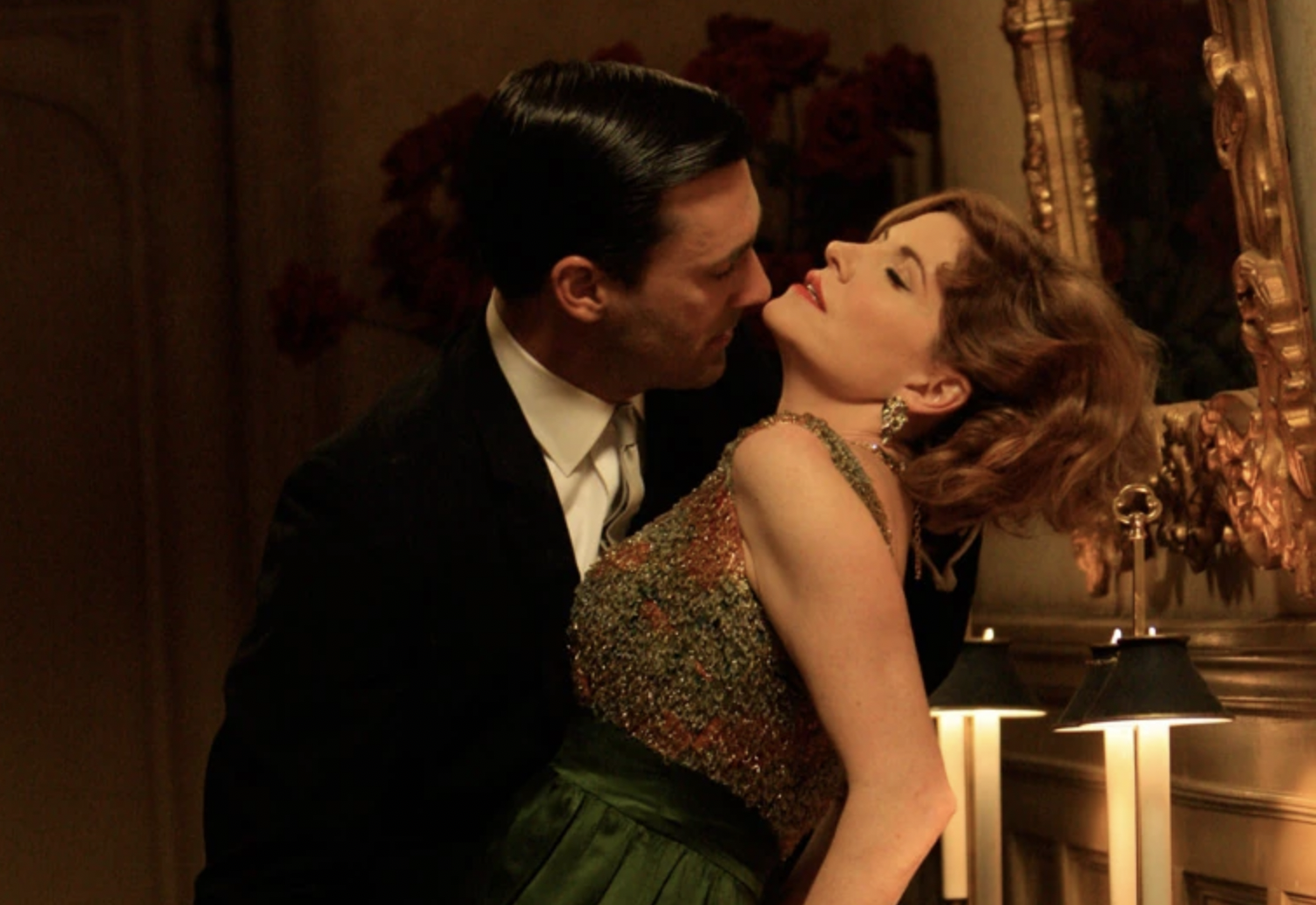
“Don’t sleep with another man’s wife. You’re garbage and you know it”
For the first 9-10 episodes of season one, I was rather taken aback by how uninteresting of a human being Don Draper was. He was so much on auto-pilot mode as a human, caving to his worst instincts. After Roger’s heart attacks though, Don seemed to have something of an awakening. It was not so much a moment of clarity though – it was closer to Don crashing into a brick wall and realizing (a little slowly) that something was very, very wrong. He could not articulate what it was, and he probably could not understand it. But it leads him on psychological journey that is the closest thing to a focus for season 2, as it drives so much of the action and dominates his and Betty’s life. (And I suppose in many ways drove the rest of the show.)
Don is high on his own supply, professionally – even as personally he really has not improved in any way. Don doesn’t want to believe he’s garbage, but he does not have the tools to change his behavior. The equivalent of the Roger heart attacks this season is the fall from “grace” for Freddie Rumson. Freddie says, “If I don’t go into that office every day, who am I?” Don is very protective of Freddie in ways that seem as if he recognizes that Freddie is one potential future for him.
Meanwhile, Betty longs for anything to feel alive. She is rebelling and pushing back on the life she simultaneously is trapped in and trapped herself in. She does not want to be like Helen Bishop – a single parent. She both chooses the status quo and gets trapped by the status quo. The tragedy of this class of United States white women then (and largely, now) is this tension between the societal forces pressuring into this trap and also succumbing to the temptations of this trap willfully. That is no better captured than Betty not being able to fight back against the pressure around her to stay pregnant.
The world is starting to change and the characters are starting to sense it. None of them are prepared for it though. Only Paul seems to have an inkling that the societal status quo is not good enough but he may be the least qualified of any them to be a part of it, substantively. The Cuban Missile Crisis is on. Armageddon is coming for the world. What can you do? Well, Don returns home from California (the only place he is actually happy – with the real Ms. Draper) to pretend to be happy with Betty. Who is pretending to be happy he is back. Nuclear bombs may not have gone off – but the world these characters cling to is soon to be irrelevant anyway.
6. Season 6: “Don’t act like you had a plan. You’re Tarzan, swinging from vine to vine!”
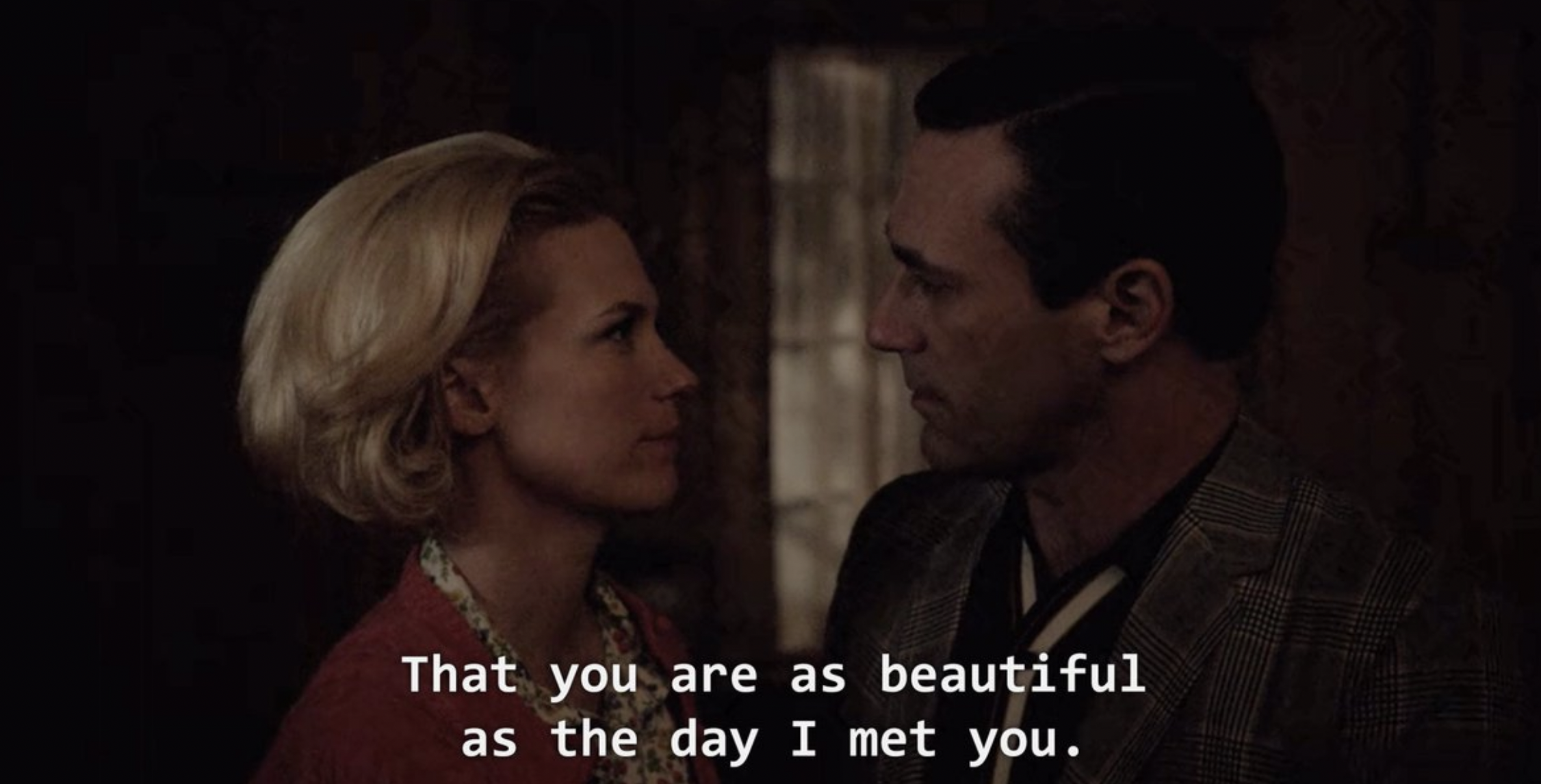
If season 5 was centered around Don trying and failing to establish a marriage with a woman nearly half his age, this season was centered around Don giving up and regressing in every manner. Don and Megan were doomed to failure. Megan had not finished fully exploring who she is yet. Megan is now an actress, and Don has nothing left to make his deep sadness with life. He has never been more of a boozehound – he is cheating on Megan with their neighbor/friend. He cheated on her WITH Betty. His body is probably composed of whiskey more than anything else at this point.
It seems like he is at a new low – that is until Sally catches him cheating on Megan. Only then do we truly learn what bottoming out for Don is like. He possibly destroys Megan’s career. He psychologically tortures Ted after convincing him to merge the two companies. He just takes and takes and is self-centered to a degree that he’s possibly never been before. And he’s finally no longer worth the trouble. At the end of the season, Don is cast out by Roger, Bert, et al. While this season in many ways felt less focused and tight compared to the electric run the show was on from seasons 3-5, this season was nonetheless a brilliant exploration of Don Draper.
5. Season 7: “The moon belongs to everyone.”
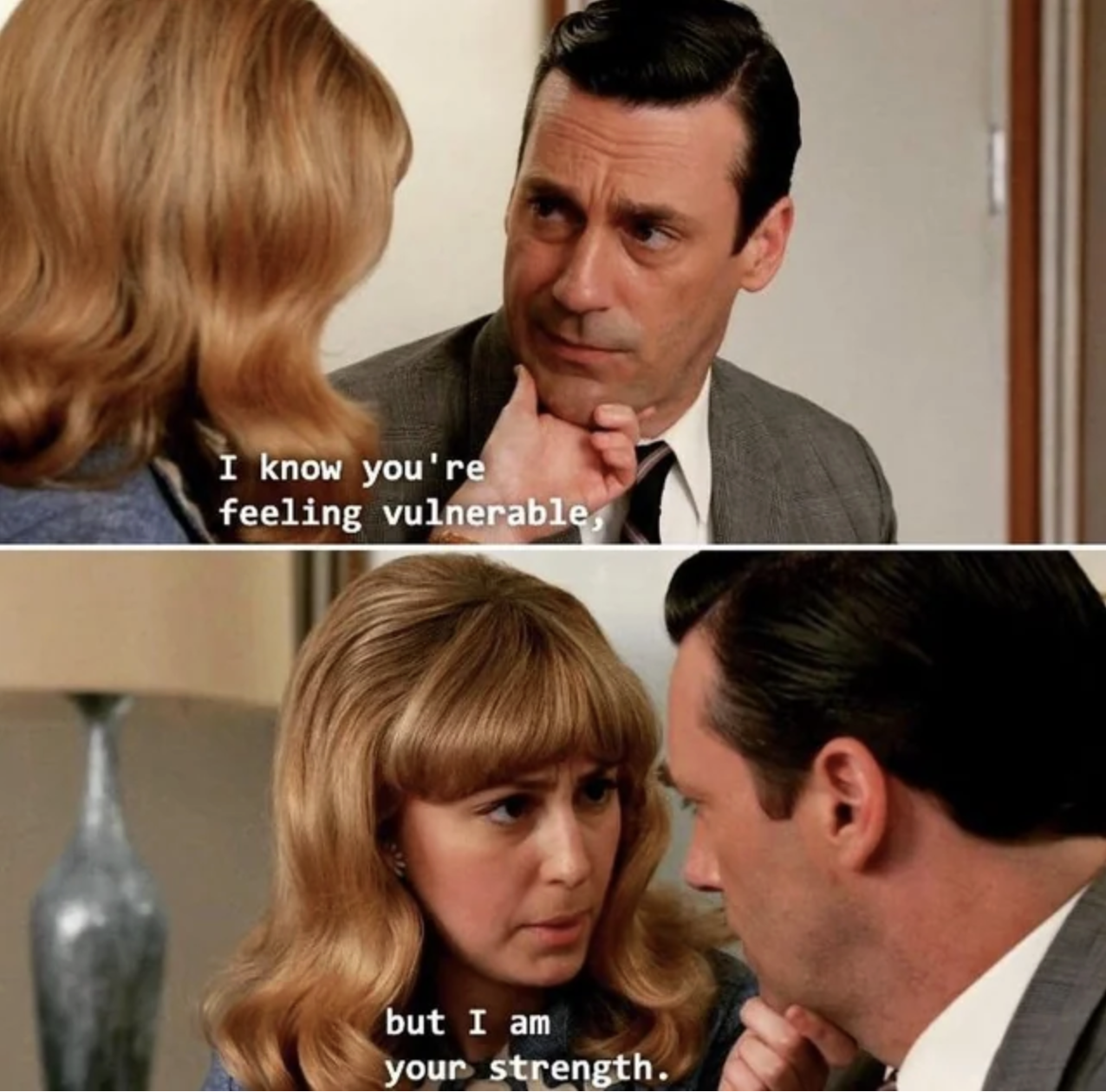
Season 6 ended with Don being cast out to sea by his own firm after one (or several) self-destructive moment(s) went too far (and cost them all too much money). Season 7 begins with Don fruitlessly trying to reset his life as if the consequences of his actions wouldn’t be felt.
He tried to act like Megan’s life is not irreparably different now that she quit her NYC acting job and moved to Hollywood. He tried to act like he can return to the company that he almost blew up time and time again. He tried to act like he and Sally can simply move forward no matter the psychological damage that has been done. But the future is here. The consequences are real. The old are dying off. The young know the world is mad. But there’s nothing they can do but sell out or lose their minds.
The moon belongs to everyone? Maybe. But what is the moon? A distant rock that offers nothing to anyone but delusion. What good is the moon to everyone when we have built such a broken society.
4. Season 8: “Stop Struggling. You won.”
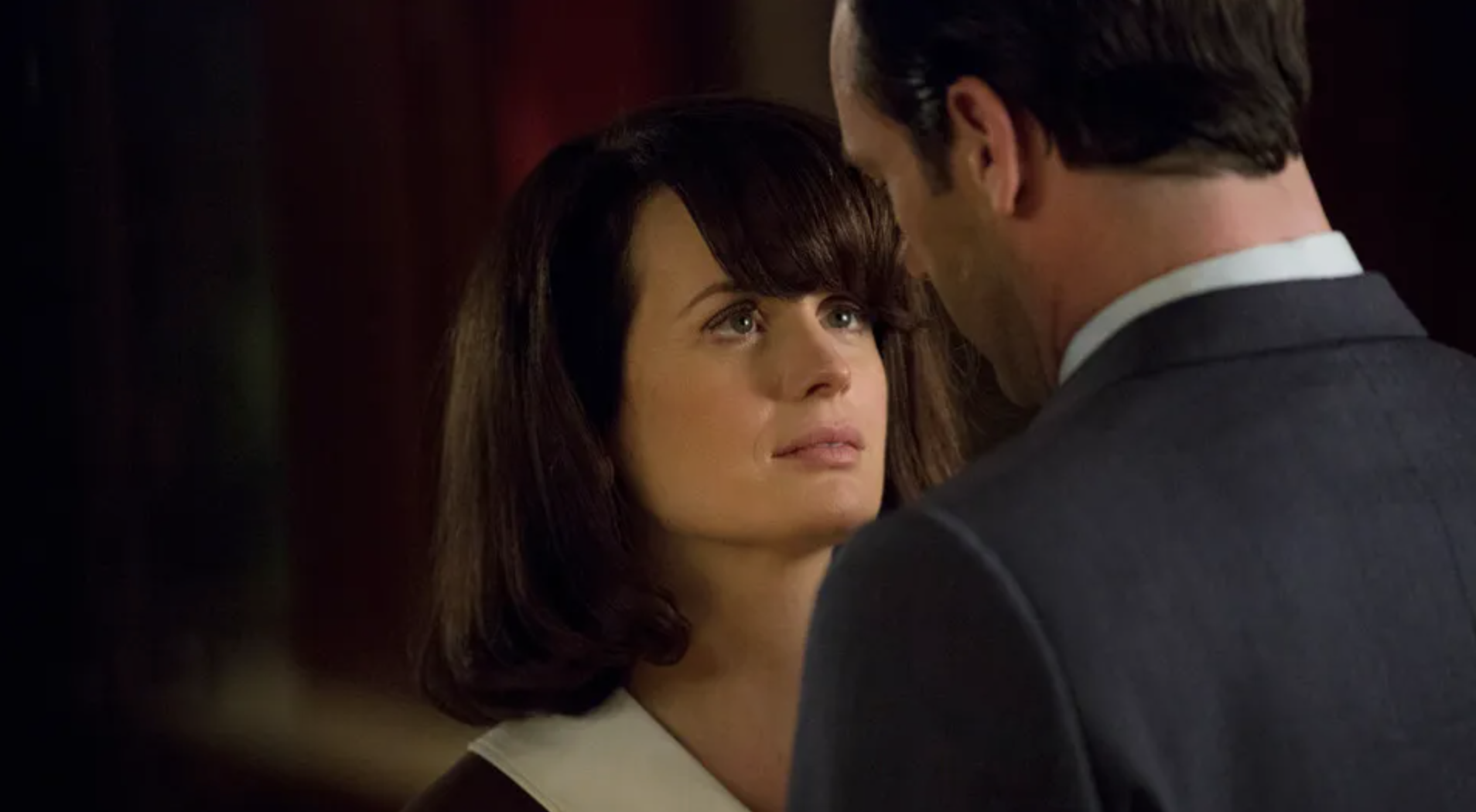
“Please don’t let your pride interfere with my wishes…Don, honey, I appreciate your intentions. I really do…I want to keep things as normal as possible. And you not being here is part of that.”
The final few minutes of one of the greatest works of art this century is such an odd note on the surface. Pete and Trudy reunite their nuclear family. Joan starts a production company. Roger and Marie are joking in a French(-Canadian?) cafe and in love. Sally willfully does chores so Betty can rest. Peggy and Stan succumb to proximity to be together. Don sits with fellow lost travelers and tries to find inner peace. Don smiles.
But is this happiness?
Then the show cuts to the Coca-cola commercial that commodified the tone and mood of the 60s period of rebellion: the 1971 “Hilltop” television advertisement for Coca-Cola, created by the firm that Don works for – McCann Erickson.
There was no other way for Don’s story to end. The boy who dreamed of indoor plumbing. The boy was conditioned to believe growing up that he was unlovable and not worth anything, The boy who grew up to look like a man that everyone worships before he even opens his mouth. The boy with the “well-studied manners” design to offend as few as possible. Designed to be The Perfect Man. A man who has bottled up his pain so much.
This combination leads to the destructive interlocked traits of arrogance and insecurity. When combined, they make a chemical reaction that destroys oneself and everyone around them. When combined with the ability to sell something in this country, you get a man that is possibly only capable of making the world worse. The only way that little boy can achieve any sense of even temporary inner peace and self-actualization is through maximizing the commodification of the world around him.
Did Pete really grow up and get over his own hangups? Has he exorcised the inner need to treated by the world like Don is?
Has Joan simply just bought into White Feminist Capitalism? Is the freedom to spend your life chasing pleasure not better?
Maybe Roger and Marie got their happiness. Maybe. They survived their lives long enough to run into someone who makes them smile. For now.
Sally is likely earnestly taking care of her mother. And it’s not meaningless – but look at what it took to get there.
Peggy and Stan have succumbed to the workplace proximity trap. Do you actually love each other? Or are you two just the least annoying people within one square mile every single day? What couples that met in the sixties built a life together that could be something you really want? Did Stan just magically grow out of his misogyny over the years through osmosis?
Are these our only paths forward?
“I’d like to buy the world a home. And furnish it with love. I’d like to teach the world to sing. In perfect harmony I’d like to buy the world a Coke. And keep it company. That’s the real thing Coke is what the world wants today.”
“Dear Milena, I wish the world were ending tomorrow. Then I could take the next train, arrive at your doorstep in Vienna, and say: ‘Come with me, Milena. We are going to love each other without scruples or fear or restraint. Because the world is ending tomorrow.’ Perhaps we don’t love unreasonably because we think we have time, or have to reckon with time. But what if we don’t have time? Or what if time, as we know it, is irrelevant? Ah, if only the world were ending tomorrow. We could help each other very much.” ― Franz Kafka
3. Season 5: “Sometimes we don’t get to choose where our talents lie.”
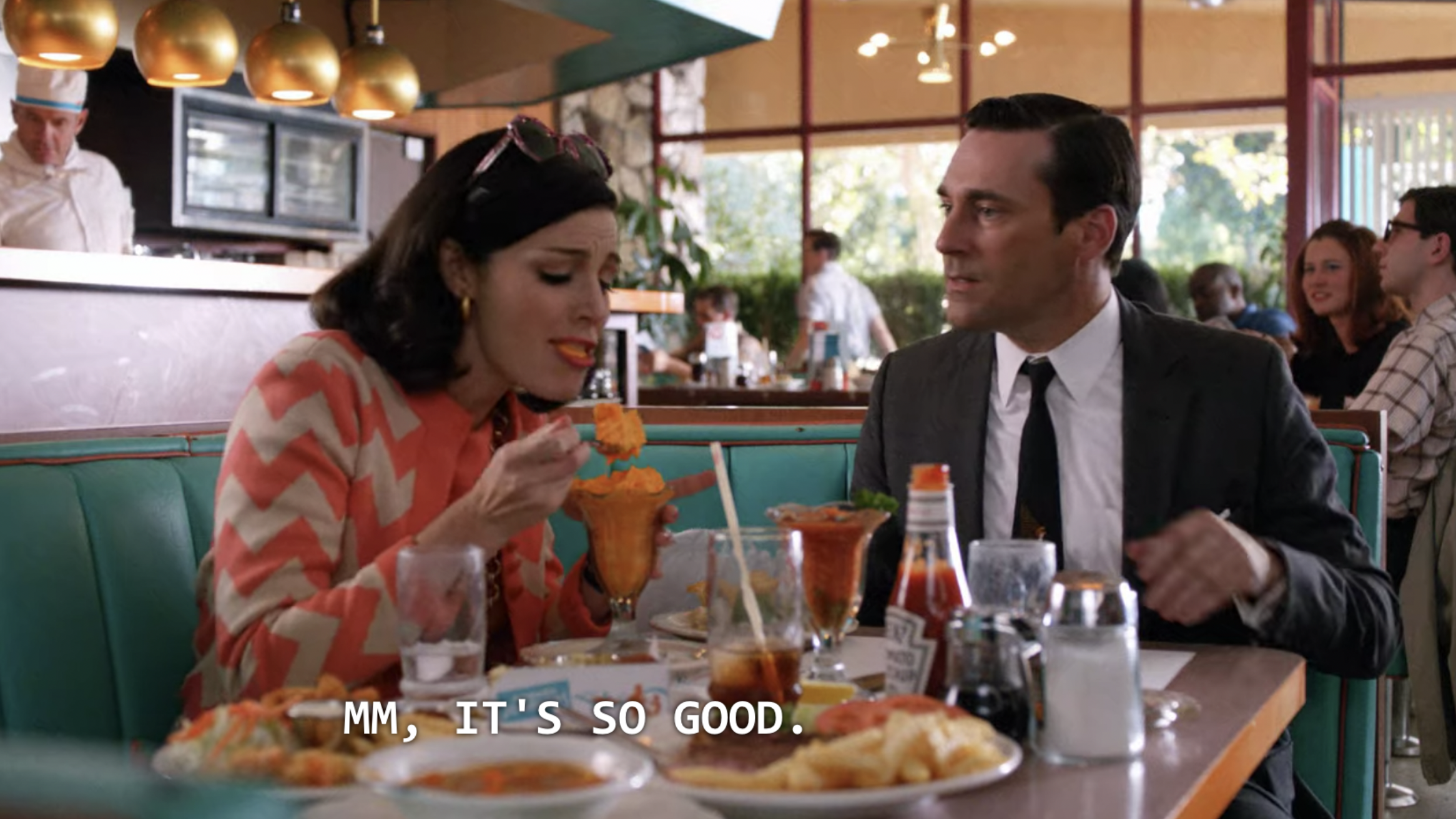
The most interesting aspect of season 5 is the deep dive into the Don and Megan marriage. You so rarely see an empathetic exploration of why a relationship with a significant age gap is doomed to fail. It would have been of course naive of anyone to think at the end of season 4 that this sudden engagement would lead to anything truly transformational for Don.
But if there was any doubt, Megan fully displays her ignorance on all things Don in the season premiere by throwing Don a giant surprise birthday party (for his fake birthday). Sure, Don has done some things differently with this marriage. Megan knows all about Dick Whitman. Don is not receptive to overtures to cheat. But these two have no chance together no matter the best of intentions.
He thinks he knows everything about the world and there’s nothing left to learn whereas she doesn’t know what she doesn’t know yet what she doesn’t know yet. She still needs to discover things for herself and learn about herself. They were only going to fail. It is so beautifully done all season long.
2. Season 4: “There is no fresh start! Lives carry on!”
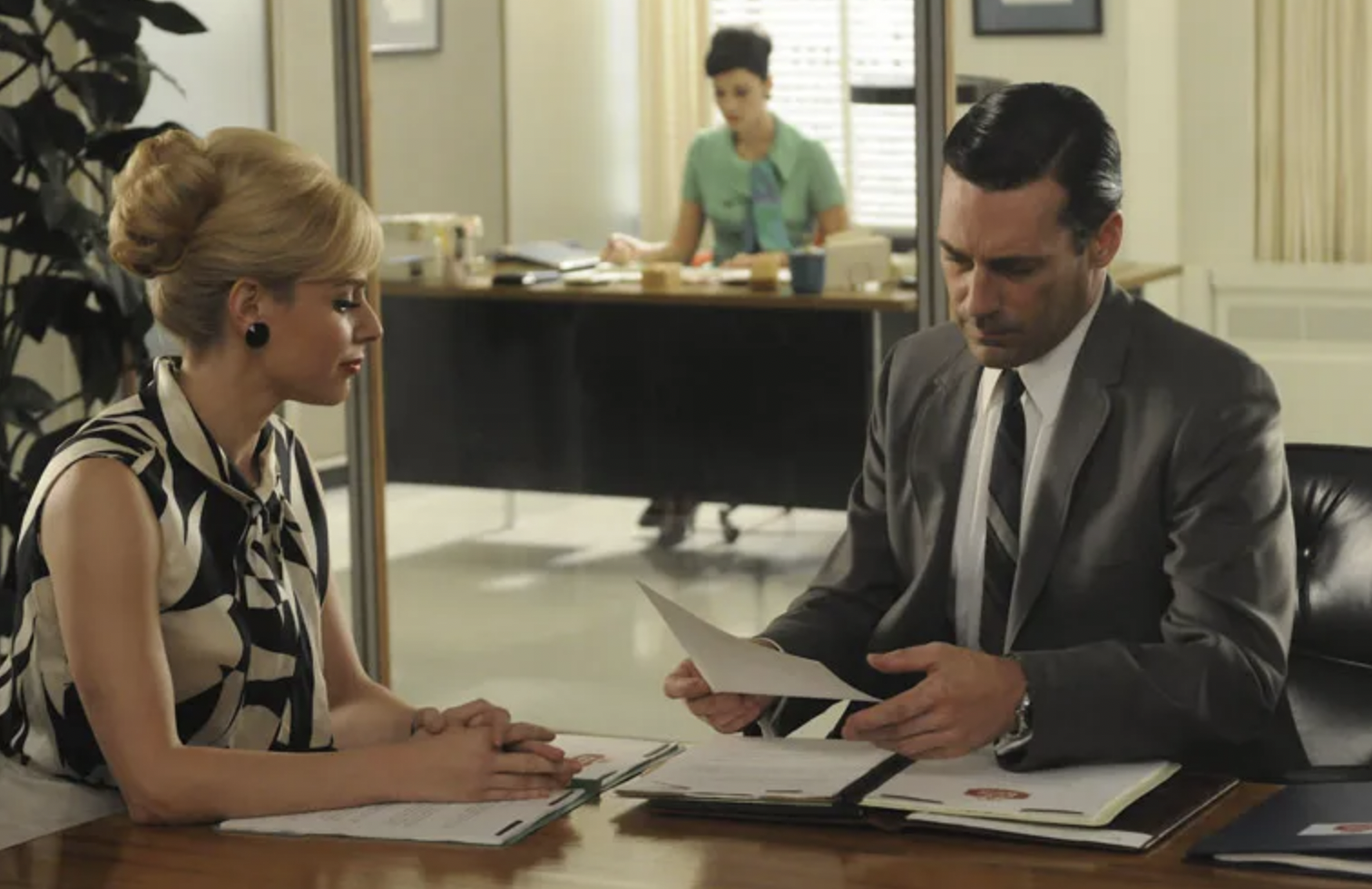
The world of Mad Men went through what seemed like some real transformational change at the end of season 3. Betty divorced Don and was set to be married to Henry. The titular mad men schemed to escape the corporate overlords (whom they had previously submitted to). After four seasons though, it becomes clear that these supposed major changes at the end of each are just surface deep. As Henry conveniently lays out at the end of this season, there are real consequences and casualties to peoples’ supposed fresh starts. Without the tools to do the real work for inner and substantive change, we are always just deluding ourselves. Development may be non-linear – that does not mean one’s journey does not harm others along the way.
Betty has changed her circumstances – but is still the emotionally stunted woman who feels the most comfortable while talking to a child psychologist. Sterling Cooper Draper Pryce is now more dependent on Lucky Strike than ever before and left vulnerable for the inevitable moment when Lee Garner Jr. pulls out all of their cigarette business.
And Don. Oh, Don. You’re so desperately trying not to be Roger but you have no vision for what you want to actually be. And you definitely don’t have the emotional tools to make your better life possible even if you knew what you wanted. And now you’ve run over Dr. Faye, pushed your company to the brink of destruction, and married your secretary. Oh, Don.
The only person who is really changing in significant ways is seemingly Peggy. And she is learning how to be a Corporate Girl Boss. What a great step forward for her and the world.
1. Season 3: “Now that I can finally understand you, I am less impressed with what you have to say.”
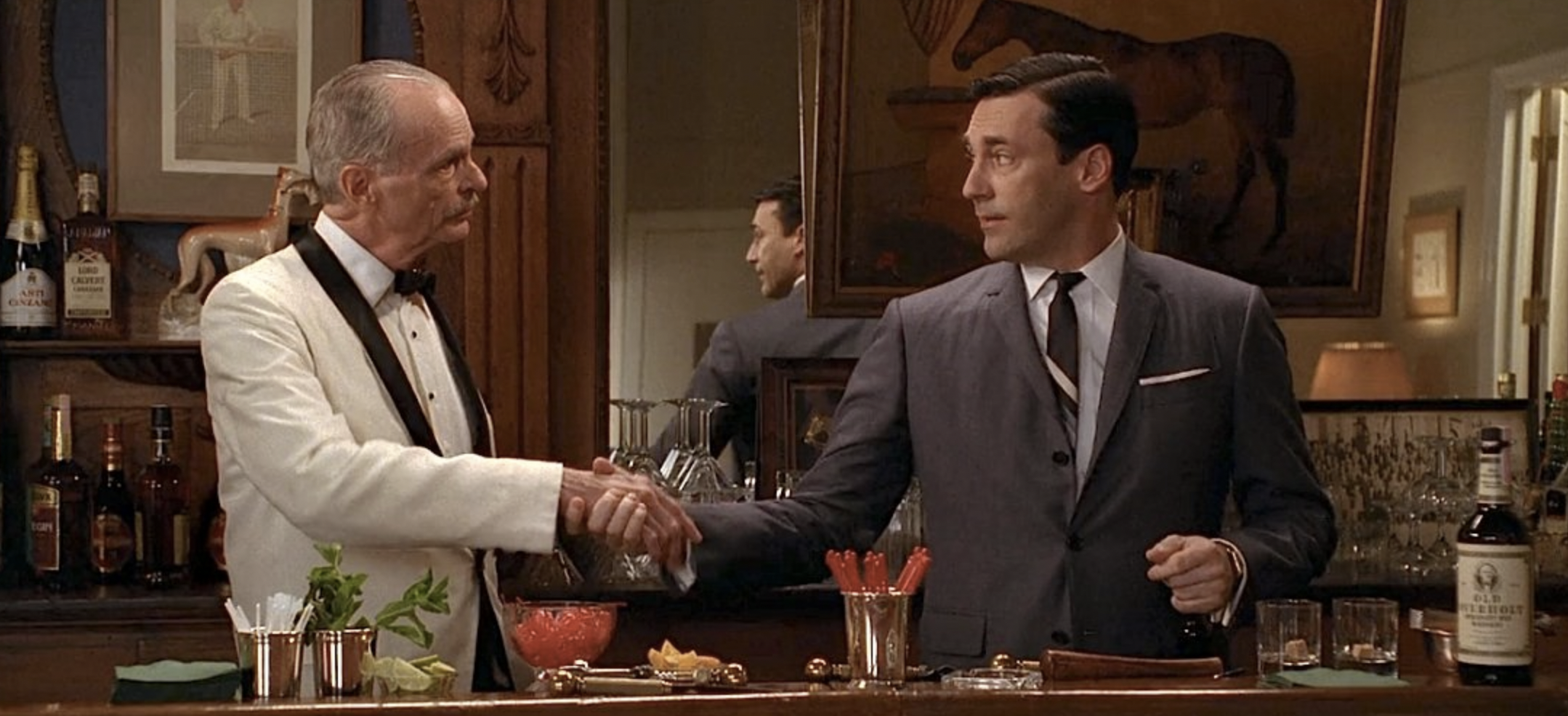
Season 3 of Mad Men is one of the greatest seasons of television in history. The season in so many ways feels like the total destruction of innocence, as the season follows Don and Betty on their way to divorce. Now, obviously, there was nothing “innocent” or “pristine” about their marriage before this season. But divorce was still so uncommon and the importance of the appearance of the idyllic American Dream life was still so prevalent – the destruction of innocence still feels relevant. That is what the 60s were about after all. The last decade in which a critical mass of people felt like the country made sense and the government was to be respected. When even Republicans like the majority of the characters in the show could be devastated when JFK was assassinated towards the end of the season.
The season feels like it is silently building to so much destruction that you do not see coming. Sal is forcibly removed from the show by Don; Don’s “decency” fully absent in how he talks to Sal. Paul is the last one to find out he is not valued here and is going to be left behind as the company moves in a new direction. Peggy is carrying out an affair with Duck and trying to be more like Don in some ways. Joan’s version of the perfect life completely falls apart. Roger and Don are feuding almost the entire season – their “Gilbert and Sullivan routine” is revealed to be a full sham. Betty is the one to carry out an affair and force the end of the marriage. Don getting screwed over by Conrad – he is treated as the disposable object instead of the other way around. I ate up this season, and it felt like the show was fully formed here in a way I did not remember.
 The Reel World