
Todd Haynes is one of the great living American directors. Few people out there have as consistently captured the tragedy of the United States of America as well as he has done on the big screen.
10. Wonderstruck [2017]
 Wonderstruck is the one Todd Haynes film that not only did not impact me much but also seemed to make little to no imprint on much of anything! The only aspect of the film that felt truly notable to me was that once again Haynes used his separate, inter-cut stories here. We learn at the end they were far more connected than was initially clear but that very direct connection only really served to spotlight how much less interesting this film was compared to Haynes’ past use of this format. You can rest easy skipping this film entirely.
9. Poison [1991]

Poison is just a stunner of a debut film from Todd Haynes. Even if many a great filmmaker have started off with great movies over the years, rarely do you find one that just feels so confident and sure of itself. Haynes weaves together three thematically-connected stories that explore isolation, the queer experience, and society creating pariahs to fear.
Haynes’ use of the intercut yet separate stories obviously is something he would explore again more infamously with I’m Not There. Even more so than that film though, Haynes masterfully manages to make the three stories here feel completely distinct visually and tonally and in ways that feel fitting for their uniqueness. He also manages to make throwback-style feels for each of them that actually managed to make them feel like lost films from different eras of American cinema. While so many modern attempts to recreate screwball comedies/noirs/etc feel phony as hell, everything here feels completely sincere and genuine. It is just remarkable.
8. Safe [1995]

Going back and watching Safe for the first time long after I had seen many Todd Haynes film felt like a revelation. There have always been connected ideas in his films to be sure, but this felt like the centerpiece that connected all of them. You see the distraught housewife caught in a passionless marriage. You see how this is country is made up of fucked up systems that have produced a fucked up social order. There is something terribly wrong about this world we have created for ourselves, and it is destroying us. It leads to a total mindfuck of not being to figure out what is wrong. We are all in our own ways searching for answers and feelings of safety – and that search often can lead us astray. This film captures of all this so beautifully and empathetically.
7. Mildred Pierce [2011]
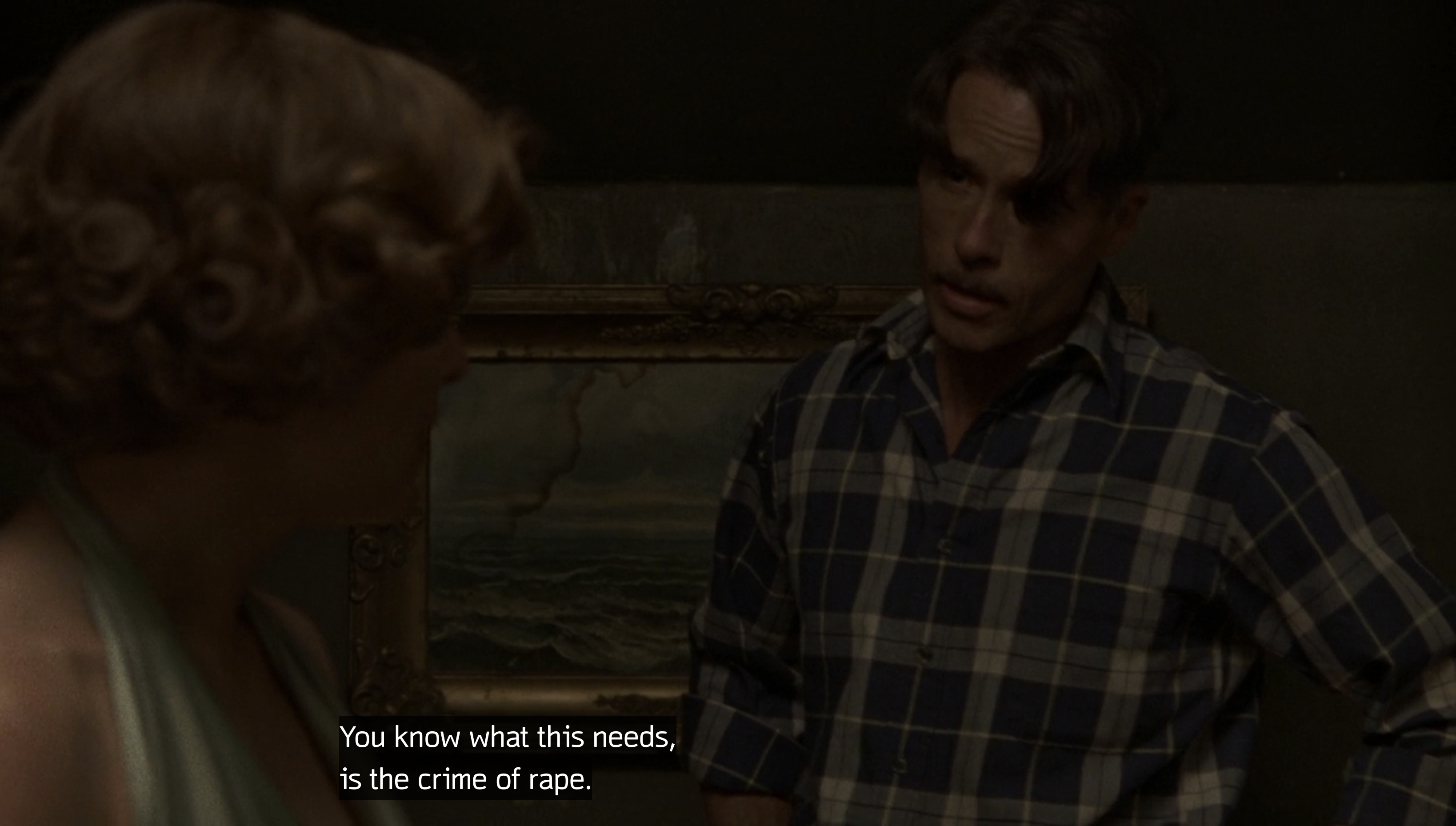
I was really struck by how this mini-series felt so thematically similar to Carol in that it’s about a woman existing in a society that does not allow for them to have all that they deserve let alone all that they want. Kate Winslet cannot have a satisfying marriage, a strong relationship with her children, financial independence, and the ability to feel like have time for themselves to develop. Now, maybe most people in the best of conditions cannot have all of those things, but even just having most of those things would be out of reach for Winslet. In her attempt to get all those things, she is punished and essentially loses all of them. The work stands in contract to Cate Blanchett in Carol who has to make the devastating choice to give up raising her child in order to have a more authentic life with her partner. We are just so cruel to each other in how we organize our societies.
6. Dark Waters [2019]
Dark Waters has one of those trailers that makes you think it is gonna be a rather generic procedural. We all love Mark Ruffalo riffling through files and screaming, “THEY KNEW! THEY KNEW AND DID NOTHING!” But it seemed like something that would be mildly beneath Todd Haynes. Then you watch the film. Yes, the film is a procedural, but it is expertly crafted and surprisingly feels very connected to Haynes’ overall body of work. From the very beginning, this country is one giant setup where a handful of people make off like bandits at the expense of the rest of us. Haynes remains untouched at capturing that in a wide variety of ways we are impacted by this broad dynamic. This is an essential film that should be required viewing for all students in this country.
5. I’m Not There [2007]
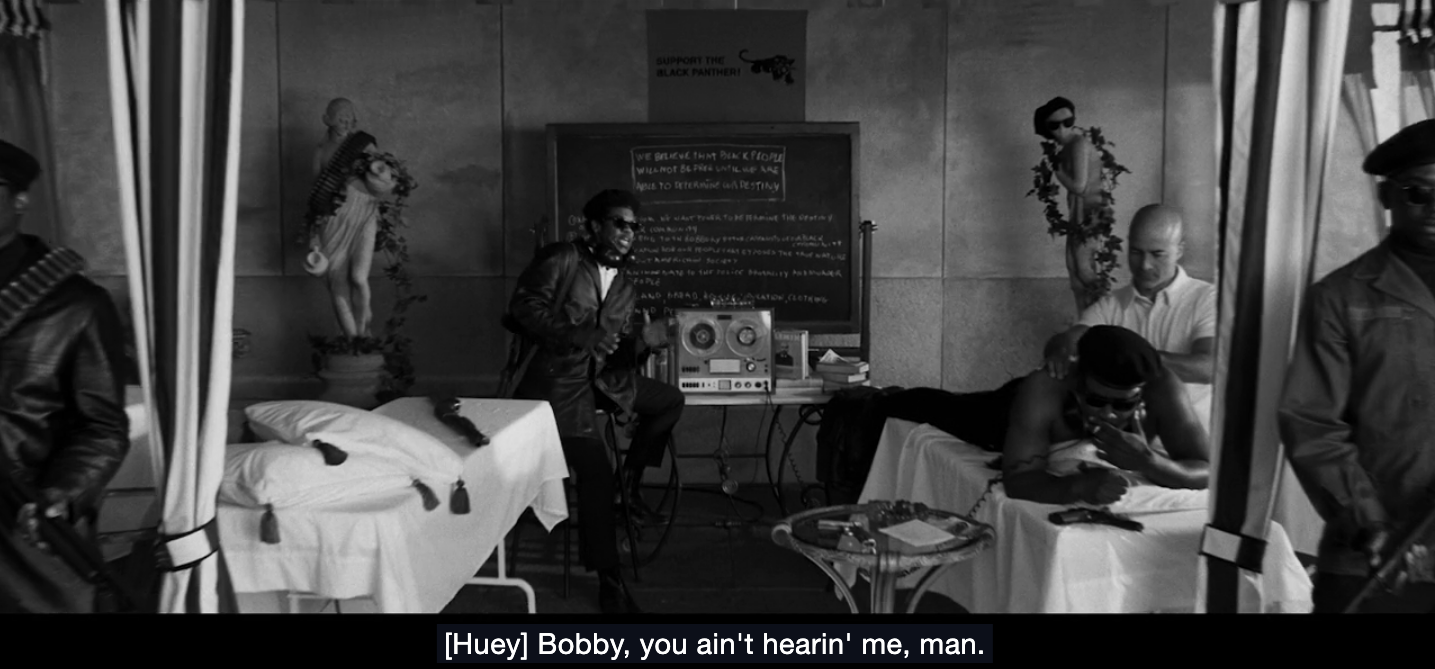
“What do you care if I care or don’t care? What does it mean to you?”
As someone who can at best be described as a casual Bob Dylan fan, my interest in this film was less about the film was saying or showing about him and rapidly shifted more to what the film was explored about celebrity in the United States. There is an obsession with artists and athletes in this country. It is not profound to point this out in any way, but they truly are set up to be a rotating series of gods and goddesses to be worshipped and tossed aside when their usefulness has worn out. I’m Not There does a great job of capturing the perception of an American God from the outside and how it shifts over time as the actual human being changes. The film examines what does our obsession with these deities means. It is a stunning film in so many ways, and much like with Mishima and Malcolm X it is another example that a “biopic” is not an inherently flawed genre of filmmaking; it just depends on what you do with it.
4. Far from Heaven [2002]

Far from Heaven captures the tragedy of this country and the way in general people have created shackles for each other. Society boxes us in, and then we are set up to fail, destroy ourselves, and run over others.
Julianne Moore has the cliche “picture perfect” white suburban life until she discovers that her successful executive husband, Dennis Quaid, is in the closet. As she silently questions everything about her life, she then slowly pulls away from him and starts to become drawn to her landscaper, Dennis Haysbert.
However, once Moore’s association (and presumed sexual relationship) with a black man is publicly seen, it destroys Haysbert’s family’s life in the community and causes Moore to retreat back to her home to give “domestic bliss” one last go. You see how so many well-meaning white people recklessly dive into situations without think and then, once our status quo is threatened, reveal the limits of our supposed beliefs.
The use of Moore as the POV puts you in the position to emphasize with someone born into a box but also recognize how quickly they run over others without thinking. It’s not just Julianne Moore’s life that itself is far from heaven, but this world we have built for ourselves is very much far away from that as well.
3. Velvet Goldmine [1998]
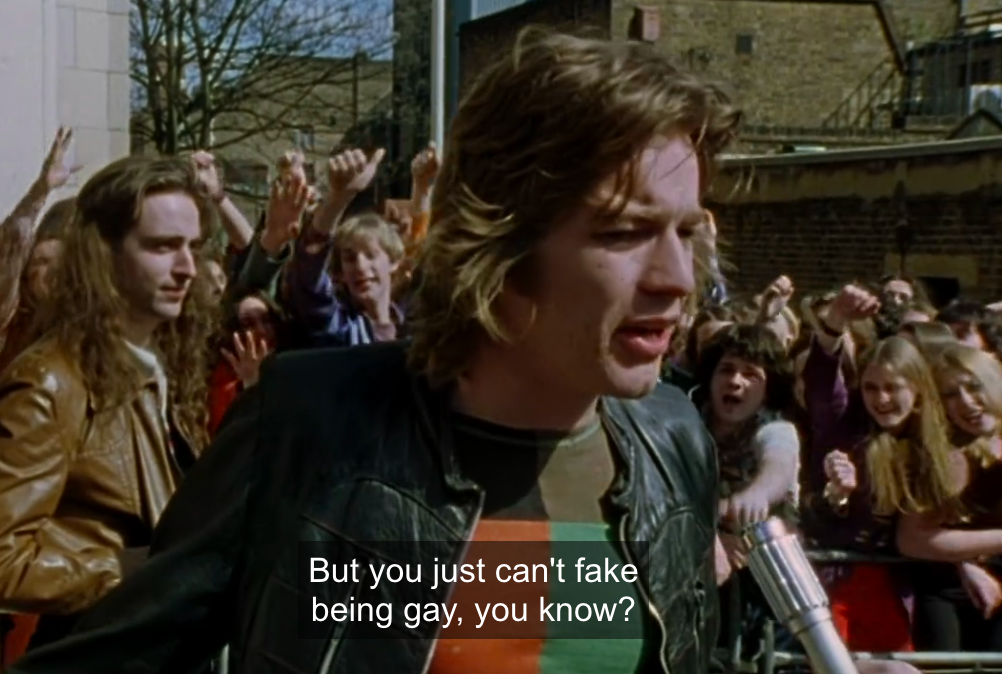
Velvet Goldmine is a rare film that explores the cynical relationship between fandom and the image of pop culture idols with empathy and total sincerity. This is not a film about judgement. It is a film about how our idols have the potential to make us feel seen and valid when their image rejects the status quo conception of “normal.”
Celebrity personas are a combination and a give-and-take between careful calibration on the part of the celebrity AND the projection of the fandom that worships them as idols. It creates this world where the line between reality and performance is blurred so much that it is hard to recognize where one ends and the other begins.
I say all that to say the old cliche that “perception is reality” is so relevant when looking at the impact of popular culture idols – they mean so much to so many no matter how genuine their image. They give strength and validity to so many. It is a deal with the devil in society and full of contradictions. But it is rare to see a film present and discuss this dynamic with so much beauty and empathy. I loved it.
2. May December [2023]

So much of watching Todd Haynes is about getting immersed into various situations that explore just how much we fuck people up and set them up to fail. While that is happening in many ways here, it is of course “most” happening to Charles Melton’s Joe. Melton delivers a shattering performance of a man who was robbed of so much of his life. He was preyed upon as a young boy and lost out on so much. “That’s what grownups do.” While Joe’s story is especially tragic in very obvious ways, it really captures how much this world just destroys people from the very beginning. And then they go out and break more people. This is a movie that will sit with me for a long time and needs to be rewatched.
1. Carol [2017]
 Every time I watch Carol, one of my favorite films of all time, I find myself drawn to the story of Harge. It feels essential to the understanding of the film. Here is what I wrote shortly after its release:
While the awards season buzz for Carol has mostly (and very deservedly) concentrated on the performances of the wonderful Cate Blanchett and Rooney Mara, the work done by Kyle Chandler has been in some need for praise and celebration. The film was about the Blanchett and Mara characters of course (as well it should have been), and it was a gripping and (at times) emotionally devastating story of two women punished and held down by patriarchal values and institutions. It becomes clear though by the end that the film also expresses how those same values and institutions are crippling for men and thus, making matters even worse for women.
In the film, Chandler plays Harge Aird. He is the soon-to-be ex-husband of Blanchett’s Carol Aird, and it is immediately clear that he is struggling with the transition. He comes off as angry child not getting his way, and he is small-minded when it comes to Carol’s desire for a relationship with another woman. As a result, he wants to punish Carol with a gruesome divorce that could result in Carol losing all access to their daughter. He clearly is pushing an agenda that will shatter their family with no hope of finding a balance that works for everyone (or anyone).
This is what happens when a society conditions someone like Harge to expect everything to go a certain way. Everything in his world told Harge that he would be successful, get married, and have children. When his relationship fell apart with a woman who did not conform to society’s heteronormative worldview, he lashed out like the emotionally crippled man-child that he was destined to become. While that would be in no way an excuse for his poisonous behavior towards Carol, it does help to explain it. In the hands of a lesser actor or a more lazily constructed film, the Harge character could have been a two-dimensional villain. In the hands of Chandler and director Todd Haynes though, we get something far more nuanced.
There are various moments in the film that make it crystal clear that Harge harbors no innate ill-will towards Carol (or women just because they’re women). You can tell by the pain in his face at times that he does love Carol the person and wants to be in a loving relationship with her. He is just not equipped to handle the concept that the wants and desires of Carol the person do not match up with his idea of who Carol should be. If not for Carol’s bravery (I’ll let you watch the film to see exactly what I mean) late in the story, the whole family would all be left in an emotional wreckage. By holding down women due to archaic values and practices, everyone suffers (that is not to suggest in any way that women do not suffer more).
The film correctly positions Harge’s story on the fringes and as a mere supporting story to the journeys of Carol and Rooney Mara’s Therese Belivet. It adds an important layer though to one of the general themes of the story: the patriarchy is suffocating for all of society. It holds women down and then prevents men from developing the necessary tools required to become an emotionally generous and understanding person. It creates self-involved men who become participants in not only the oppression of women but their own.
 The Reel World