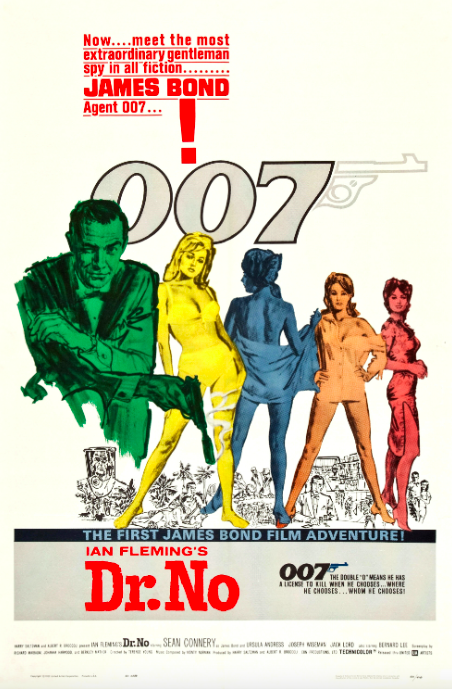
Director: Terence Young
Year of Release: 1962
Should you watch it? Of course. It is the first James Bond.
Why?
It is the very first Sean Connery James Bond film and for that historically significant reason alone the film is worth watching. While Connery’s Bond and the series in general would certainly top this in the years to come, Dr. No is more than solid enough on its own. There is a tight story, a compelling villain, and Connery just dominates the screen in such a compelling way. He is a force of nature from the first moment he appears, and he keeps you hooked until the very end. The other real notable thing about this film is just how unusual it feels sixty years later. There is a relatively small hint of the original Star Wars in here in just how weird some of the scenes are. There is an awkwardness to some of the fights and shootouts that just no longer exists in a world of action films anymore.
How is the Bond?

While Connery would only grow more comfortable in future films, it was remarkable just how easily he created James Bond in this film. Much like Han Solo and Indiana Jones for Harrison Ford, this was the ideal star-making vehicle tailored to all of Connery’s strengths. The physicality. The raw sexuality. The confidence that never borders on cockiness. The slight vulnerability that adds to stakes. It was all effortlessly on display right from the jump.
How is the Bond Woman?

Ursula Andress as Honey Ryder made for one iconic image coming out of the water. Beyond that though, there was not much to her performance or her character that bears much mentioning.
How is the Bond Villain?

Joseph Wiseman was effective with his relatively small role. Like many Bond villains, they keep him off screen for much of the film until the climax to build his onscreen power. He essentially needed to do one thing in this film and that was to be unnerving. He successfully accomplished that.
Does the film irresponsibly present the West as the hero of the world and thus promote imperialism and colonialism as inherently positive?
Yes.
 The Reel World