
Films to Still Watch; Fellini’s Casanova, Orchestra Rehearsal, City of Women, Ginger and Fred, The Voice of the Moon
Federico Fellini is one of the most iconic filmmakers of all time. I was introduced to 8 1/2 in my teenage years but it took me two decades to finally go and dig deep into his work. He clearly deserves his reputation for many reasons. He is though a classic example of an artist that struggles with writing anything but what he knows most dearly. That is not really a knock but worth noting. Here is how I have his films ranked so far in my exploration.
14. Fellini Satyricon [1969]

I appreciate the stylistic and narrative boldness of the filmmaking choices here, but I did not really care about this film in any way. Good on Fellini for being insane enough to make it. Its shock value will do more for others than it does for me.
13. La Strada [1954]

There are some interesting ideas in this film. It is fundamentally about a repressed woman learning independence, and that is always a worthy thing to explore in art. Fellini’s path there though was odd. The main character is “simple-minded” for wont of a better term. This was a convenient way to make this point about a young woman learning about the world and her own desires and potential for independence, but it was not terribly interesting moment to moment. The film asks important questions about what this world does to people. What was Zampano like before he was turned into a cruel and selfish asshole? How is selflessness and wonder crushed in people? But Gelsomina’s pre-apple biting innocence came off as trite and unworthy of Fellini (even for one of his early films).
12. And the Ship Sails On [1983]

It was a worthwhile idea. Fellini was exploring Europe on the precipice of The Great War and showing just how unprepared the elites were for the world order to be toppled. It just did not reach the full potential of the concept. The film succeeded at establishing how the elites have created all this distance between the real world and themselves, and the conflict comes when the lower classes are forced onto the elites in the way of Serbian asylum seekers join the elites on their luxury. This should be a moment when the elites recognize the shared humanity, but instead of course they just abandon the Serbians at first opportunity. It is a bleak but accurate film. It is just not all that special.
11. The White Sheik [1952]

“Yes, life is a dream, but sometimes that dream is a bottomless pit. A bottomless pit.”
This early Fellini beautifully captures the exact feeling of being way too young to settle down for the rest of your life. Everything feels very chaotic and everything gets way out of control without you realizing it, and self-destruction and anxiety pile on top of each other until you have no realize what impact you are having on those around you because you are completely caught up in your own bullshit. The manic screwball energy here leads less to big laughs but instead to creating an atmosphere that feels all-too-familiar to what it feels like to be caught up inside one’s own brain. Fellini stays committed to rejecting the false happy ending (something he did in his first film as well); the unsatisfied newlyweds come back together at the end, but you can tell their core dynamic has not changed significantly enough. A lifetime of unhappiness awaits.
10. Juliet of the Spirits [1965]

“He stole your youth, your peace, your trust. He’s the worst kind of thief.”
Giulietta Masina was the wife of Fellini. Here she plays the depressed wife of a man who is constantly cheating on her. This is the magic of cinema. Masina in this film goes on a journey on confronting the reality of her situation. The literal reality and possibly more importantly the emotional and spiritual reality of the situation. It is an undeniably interesting and compelling journey, but it never fully hits. It is a fun b-side to 8 1/2, but I think ultimately Fellini is more often more successful at conveying the inner life of men than women.
9. Intervista [1987]

Fellini’s second-to-last film before his earth was a blend of fiction and faux documentary. It is a movie about himself and the world of movies as much as anything else, and it feels like a fitting final film (even if it’s not). It is both a fun romp and also an emotional look back on one’s life. The best scene is when Marcello Mastroianni and Anita Ekberg, playing themselves, are reunited and have a moment of watching some sequences of themselves in La Dolce Vita. It is both beautiful and haunting. It simultaneously a reminder of how beautiful the past can be and the fragility of life; it goes by so quickly and then you are old and dying. Art when it is at its best captures moment that show true life. This movie at its best is a tribute to that.
8. Il Bidone [1955]
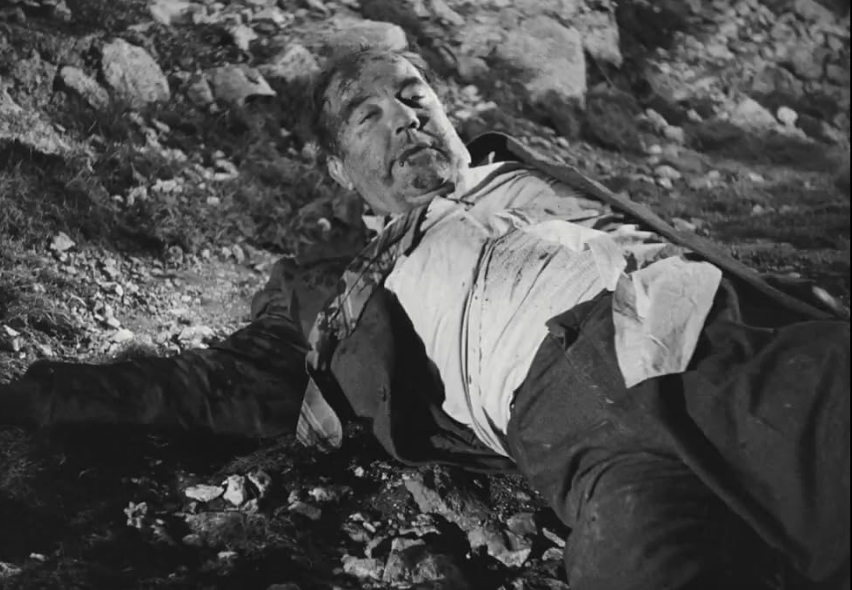
Fellini has a very strong lane as a filmmaker. He is so good at telling stories of men stuck in a terrible cycle of destructive behavior that are having trouble escaping. In this film, we see a crew of men who go around the country ripping off others – specifically, they rip off the most vulnerable people. The people who have so little that they are wiling to trade away what they do have for the belief that something better is on the way. This crew of men have been destroying others’ lives and in the process have been destroying their own souls. They have cut away their own humanity to get ahead in the world. And what do they have to show for it? What happens if you never stop your worst impulses and take control of your life?
7. Variety Lights [1950]
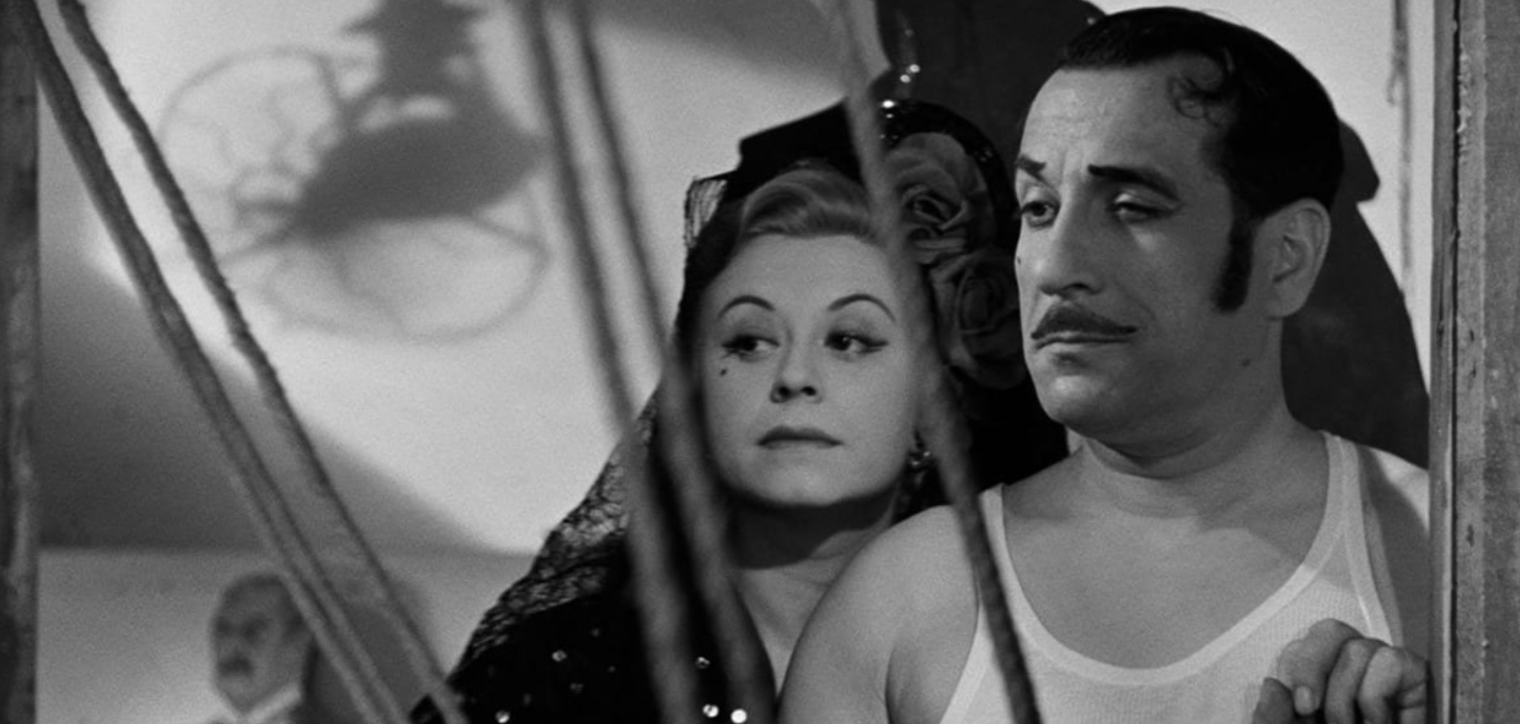
There are plenty of well-made movies out there from interesting artists that do not leave a lasting impression on me for one reason or another (Fellini’s solo debut follow-up is one of them in fact). But Fellini’s (co-)directing debut here managed to grab me at a higher level, and it is in large part due to the knockout punch, exclamation point ending that pulls the whole thing together.
The film is centered around a middle aged unsatisfied artist. He falls into the temptation of leaving behind his devoted mistress/artistic collaborator for the new young and pretty and ambitious performer. He is so selfish and self-involved that he is the only person who cannot see the impending doom. When disaster finally strikes, he comes crawling back to the woman he used to be with. It seems like he has learned his lesson only to signal that he is very susceptible of doing the same thing all over again in the very last scene of the movie. Another new woman pops up in the final scene for him to use for his own jollies while putting his life, his livelihood, his crew’s livelihoods on the line and disregarding the feelings and love from an actual good woman who cannot quit him.
What is wrong with men like this? Why are they constantly learning absolutely not a goddamn thing? And what does it say about society that these types of men are so common?
6. Amarcord [1973]

Fellini retreated to more comfortable ground after a couple of films of trying to push himself. The film is semi-autobiographical and semi-biographical (seems based on Fellini’s childhood in part and in part on his childhood friend). That is where Fellini succeeds: using his own story and those close to him to say something about being alive. In this case, growing up under fascism seems bad for the soul. Titta and his young friends are idiots. Probably no more so than most teens, but it does not seem to be getting much better for the older people in his family and in his life. It would feel condescending to refer to this film as a coming-of-age film, but it many ways that is just what it is. The formative years of a young person’s life can have an indescribable impact. Fellini empathetically and beautifully captures how messy it is and the strain on everyone. This strain is universal, but it is also specifically cruel under a fascist regime. Great movie.
5. Roma [1972]

Mood is something Fellini seemed to take true delight in crafting for his films. Never before Roma though did he decide mood would be the defining aspect of a film. He eschews plot and traditional character arcs to instead focus on the perceived vibe and energy of his adopted city of Rome. He shows the tension between the fact that Rome seemed more open and authentic before the overthrow of Mussolini compared to what followed later. The modernization of Rome is cold and less welcoming. This film is also notable for its subject. Fellini almost always made auto-biographical films but never before had he made himself the literally the protagonist; never mind actually appearing in the films as himself before. Fellini uses himself as a vessel to showcase how he perceives Rome. He is the viewer and the videographer of Rome. So really this film is not so much about Rome but about Fellini capturing his perception of Rome. A worthy project given his filmography.
4. I Vitelloni [1953]
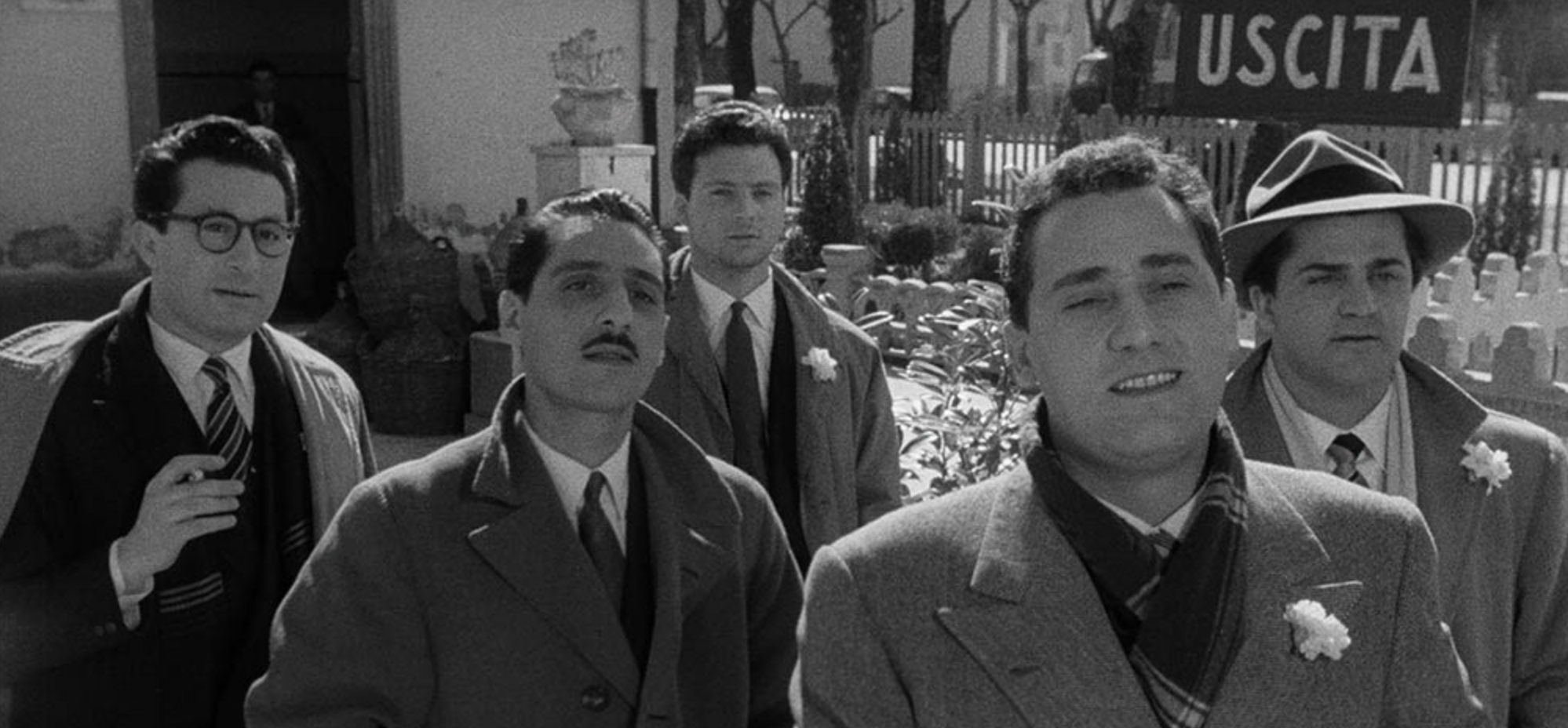
Federico Fellini was so good (suspiciously good even) at capturing what it is like to be a lost man in this world. Men can so easily fall into the trap of being socialized into terrible ideas that lead to failure and heartache for themselves and those around them. While this film is about a group of male friends, it predominantly focuses on Fausto. Fausto got one of his friend’s sisters pregnant, agreed to a shotgun marriage, has no job, lives at home, and cannot stop chasing other women (including the wife of the boss of his job that his new father-in-law got him). He is a disaster in every way. He’s also our window into the lives of all these characters and the general malaise that has overtook all of them. Without achieving any of the success they were socialized to believe they should achieve, they are all varying degrees failing in their own way. It is not a hopeless film, but it is somber exploration of masculinity. It is particularly somber in how it feels like so little has changed in seventy years.
3. Nights of Cabiria [1957]
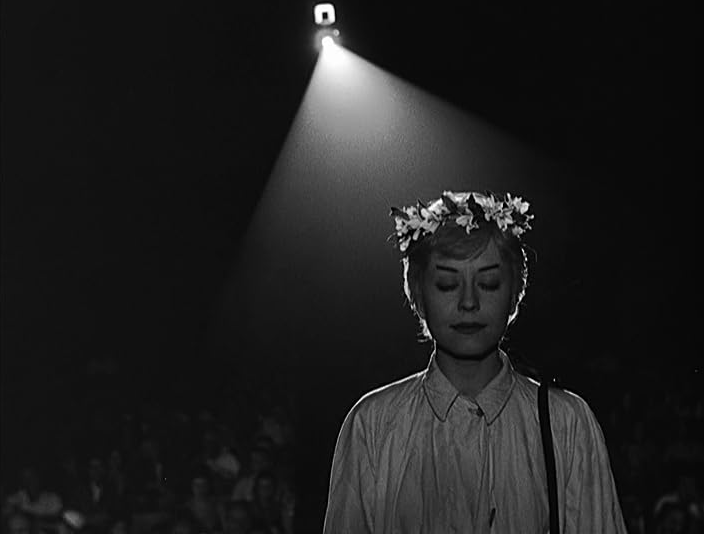 Cabiria is a woman who is so many contradictory characteristics at once. The two big ones though is that she is somehow simultaneously world-weary and naive. Despite being beaten down and left to die (metaphorically and literally), she keeps going out into the world just for the chance that this time her heart is not broken. This seems like a timeless idea. How often do you talk to people – women, especially – who have been let down by the world over and over again? No matter what they say though, it feels like they keep putting themselves out there. Nights of Cabiria is a deeply empathetic film about a deeply imperfect woman who has not given up. She is sometimes rude, off-putting, naive, self-involved, and selfish. But she is also curious, open-minded, and ready to believe that things can get better. This is one of Fellini’s best films.
2. 8½ [1963]
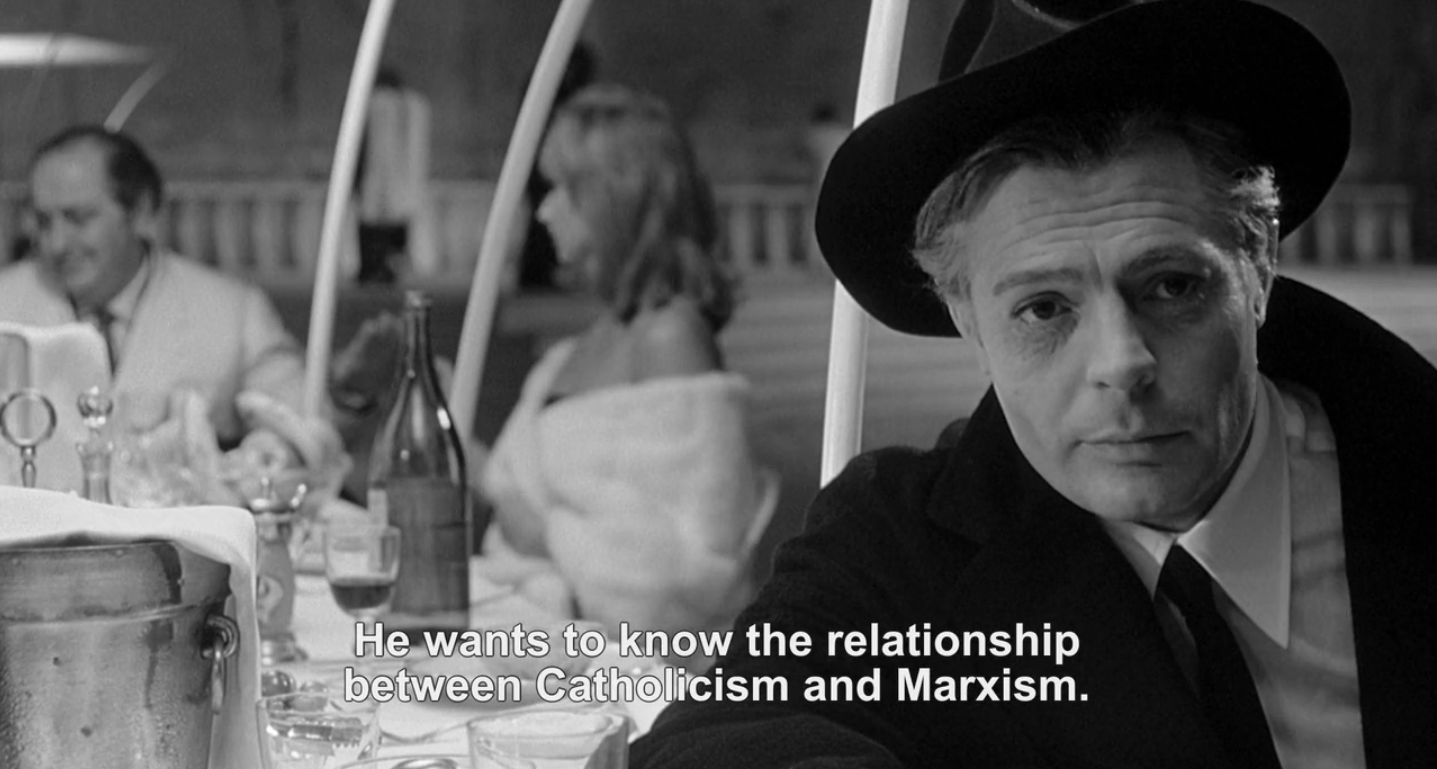
For his eighth full-length feature film, Fellini made a meta-semi-autobiographical film abouta famous filmmaker struggling to crack his next film and dealing with the guilt of being serially unfaithful to his wife. Guido is a lost man and a lost soul. He is not sure what he wants his next film to say about life because he himself is not sure what he wants to say. That is understandable as he is at a crossroads where he needs to confront the fact that he has spiritually abandoned his life partner in so many ways. He has trouble being honest with himself and with her, and now he is lost in his own mind and up his own ass. Can art save him? Can his art impact others? What is the purpose of art for the artist? For the masses? Does art matter? Does his life matter? Does it have his meaning?
1. La Dolce Vita [1960]

“Sometimes the dark silence of night weighs upon me. Peace makes me afraid, perhaps I distrust it above all. I feel its only a facade concealing the abyss.”
For so many people, even when life seemingly is going your way, you can be haunted by the paths untaken. For Marcello, he has a gorgeous fiancee (Emma) who just wants him to marry her. But he clearly is not ready. Everywhere he goes, he tortures himself and others with his inability to commit to a path in life. Clearly something is causing him to not cut Emma loose. Is it the socialization that he should settle down? Is he afraid to not have a loving woman to come home to when he wants? Regardless of the reasons, the impact on himself, Emma, and everyone around him is clear.
The alternate path of settling may seem like the right decision from the outside. But Fellini wisely shows that that way of life does not necessarily mean happiness. Marcello’s friend, Steiner, truly has it all. A beautiful wife. Two kids. A giant and gorgeous home. And Fellini, in a move that shows he believe subtlety is for cowards, has Steiner do a murder-suicide on his kids. Fellini is forcing us to confront the idea that there is something about the human condition that causes so many people to be unhappy no matter what their circumstances. Something causes people to believe that there is another version of themselves that they would rather be – but it is unattainable. Or so we believe.
 The Reel World