
After establishing himself as one of the most interesting writers in Hollywood, Charlie Kaufman finally started to step behind the camera fifteen years ago and is now one of the best writer/directors. Here is how I rank his directed efforts so far.
3. Anomalisa [2015]
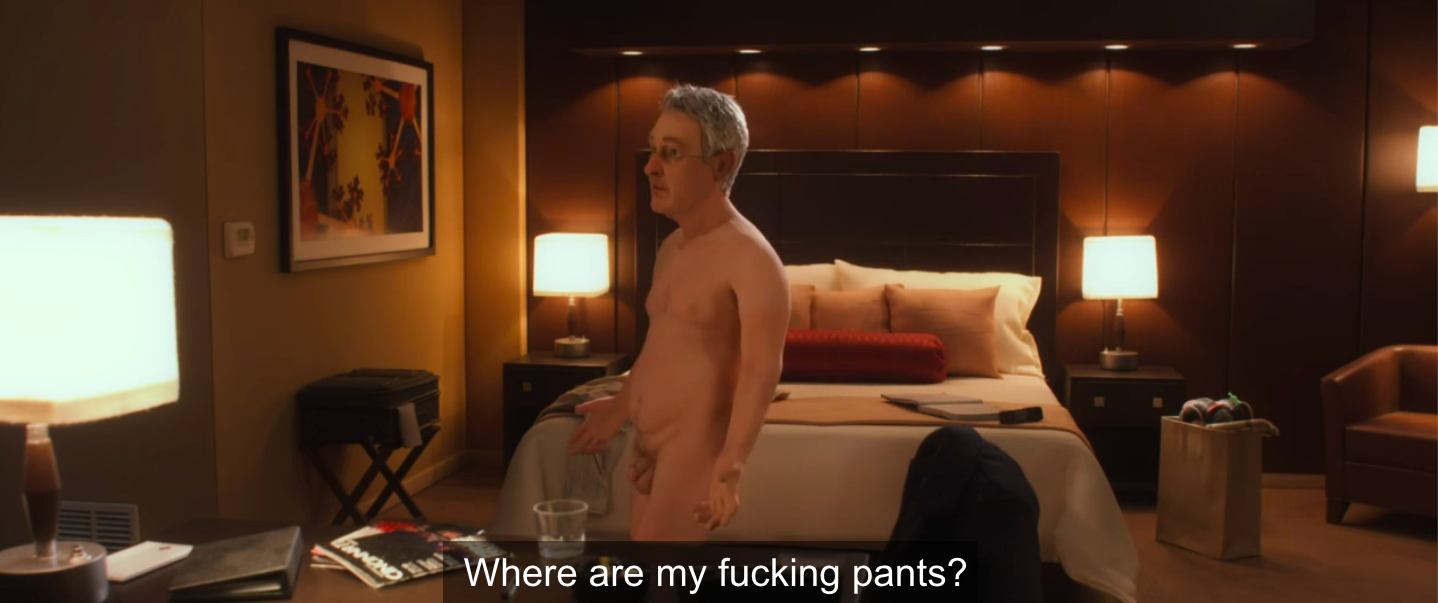
For the first two thirds of this film or so, I found myself thinking what an interesting character study centered around a typically good David Thewlis performance. (He is an unhappy middle-aged man who wrote a book on how to be better on customer service. He is financially successful but unsatisfied. Cliche but ripe material for art all the same.) I did however wonder if I would be having a stronger reaction to it if it was not stop-motion animation. It’s not a form that sucks me in much.
But then there was that moment. The morning after David Thewlis has an affair with Jennifer Jason Leigh. They are living in a fantasy without realizing it. They are in bliss. They are talking about Thewlis leaving his wife for her. It’s gonna be so perfect. But then Leigh inadvertently reveals that when she eats her teeth click on the fork and she talks with food in her mouth.
Leigh ceases to be an idea that can fix the sadness inside of Thewlis. She instead becomes a real person. And another actual person cannot fix another broken person. The image of a person in your mind vs. the reality of the person is a conflict that one must reconcile if they want to be in an actual relationship.
The moment Leigh ceases to be an idea she begins to sound like everyone else. See, the film has Tom Noonan do the voices of literally every single other character. It was a simple but relatively clever idea to emphasize how detached and self-absorbed David Thewlis is in the film. He does not see everyone else as an individual with their own needs and desires. There is only him. Until Leigh swoops in and fulfills some superficial comfort for the holes in his life. That is, until she can no longer do that.
While the film did not overwhelm me like many of his other works, it was yet another reminder of what value Kaufman brings to the movies.
2. I’m Thinking of Ending Things [2020]

There is a very specific dynamic that this film explores that I never seen so hauntingly captured. Jesse Plemons and Jessie Buckley are on their way to breaking up (though only she knows), but first they are going to meet his parents. I have never seen any piece of art so accurately capture the feeling of coming home to hang out with your parents with your partner after you have become an adult.
The surrealist approach contributes so much as Plemons seemingly reverts to being a child in how responds to the insanity of his parents. All of his maturity and grace and manners are gone. He is quick to anger and lash out. His parents simultaneously can pick up on social cues but either do not how to respond to them or refuse to respond appropriately. The father has given up on his dream and lets his bitterness dictate his interactions. The mother is so full of anxiety she just cannot stop talking no matter how unhelpful it is and how much worse it is making things.
Plemons has no idea how to exist with his parents anymore. And it is just so incredibly sad.
Beyond that, the film is also just utterly hilarious and a compelling exploration of what it feels like to be in a relationship that is not quite right (for whatever reason). “Time passes through you” and the whole relationship is doomed, but you always find some way of justifying staying in it.
1. Synecdoche, New York [2008]
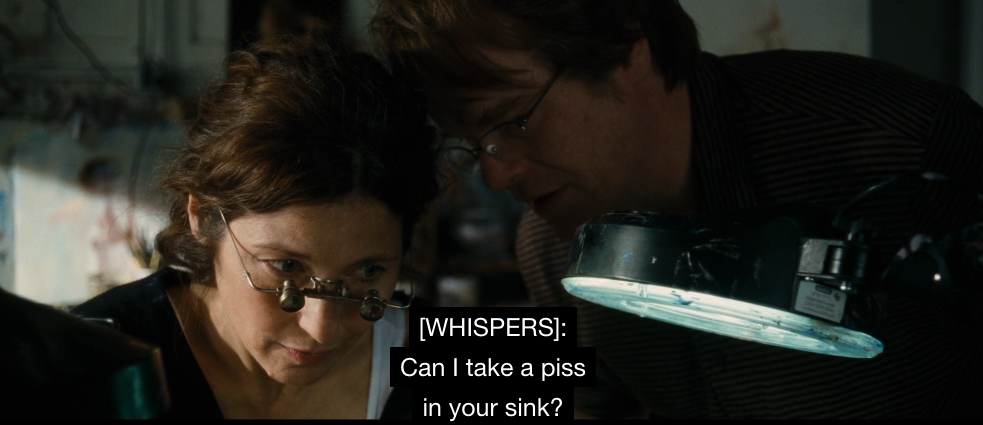
After years of writing some of the most celebrated modern films, Charlie Kaufman finally stepped behind the camera and promptly proved to be one of the best modern filmmakers. Kaufman has a singular ability to craft art about being an artist and how that is connected to just simply trying exist.
Philip Seymour Hoffman is Kaufman’s stand-in (less literally than in Adaptation). Hoffman is in a passionless long-time marriage with Catherine Keener. Both are artists that have not found true peace in the balance between their art and their personal lives. Life is stuck for them. It is static. There is a sadness. Hoffman in particular has no ability to grow and evolve, seemingly. Then Keener leaves Hoffman and takes their child with her.
From that point, Hoffman’s life becomes unstuck. Reality slowly and progressively gets more and more distorted. His art becomes increasingly up its own ass as he dives deeper and deeper into his mind and his own life in the search for “truth.” Life and art begin to imitate each other until they become indistinguishable from each other. It is a beautiful exploration of humanity.
 The Reel World