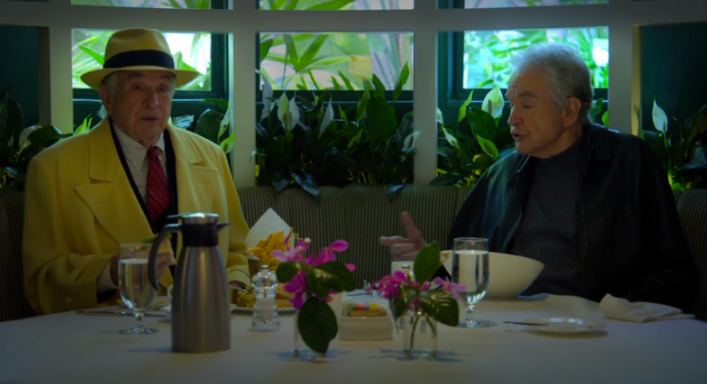
Warren Beatty is one of the most fascinating stars in the history of Hollywood. I have found him to be as compelling as any major movie star that has ever existed and always grateful to get opportunities to explore him deeper and see new layers to his work in front of and behind the camera.

This 2022 interview response by Beatty was so illuminating for understanding the conflict and tension in all Beatty movies. Beatty is the ultimate narcissist who desperately wants to conceal his own narcissism. He is embarrassed by how essential narcissism is to being a genuine Hollywood star. Everything Beatty touches becomes worth examining because of this dynamic especially when he is firmly the actual director of his movies. And it has led to some truly great works of art.
But first. His one unforgivably bad film.
Last: Dick Tracy [1990]

Dick Tracy is simply so goddamned bad in every way. Watching it was one of the most baffling, unpleasant, and boring experiences of my life. And I watched it during lockdown when literally nothing else in the world was happening. I have no idea what Beatty was thinking with this one other than potentially letting his nostalgia getting the better of him. At least it led to the absolutely batshit (in the best way possible) short films in the 21st century where Beatty goes bozo mode in order to retain the rights to the character.
4. Rules Don’t Apply [2016]

Howard Hughes is a classic Warren Beatty character. He is a relentless optimist. Larger than life. A sex maniac. Not nearly as brilliant as he thinks he is but insanely driven and competent at what he pursues. He is also a uniquely anti-social weirdo.
So, despite Martin Scorsese and Leonard DiCaprio already making an epic on Hughes, there is still some appeal in seeing Beatty tackling the former larger-than-life tycoon. Beatty heavily emphasizes the puritanical values of the time in contrast with the reputation and behavior of Howard Hughes. Is Beatty being introspective? Is he challenging his younger self? Or is he challenging the criticisms of his younger days?
While all that sounds intriguing, the first half-hour of the film is fairly underwhelming. Beatty saves his first appearance for as long as possible to make a big entrance. This was a case of Beatty suppressing his ego too much and successfully hiding his narcissism too well. He would have understood in his younger days that people want to see him. They do not want to see the fake Han Solo and Emily in Paris.
And then an hour in, some magic happened. Warren Beatty did a sex scene with Emily in Paris. This moment really captures the greatness of Warren Beatty if simultaneously calling attention to the shortcomings of this particular film. We want Warren Beatty being Warren Beatty on the big screen, warts and all. We want him confronting his narcissism on screen, not hiding from it. We want him being larger than life which gives us the clearest view of all of his flaws.
The rest of the film becomes far more interesting as it becomes far more about Warren Beatty and Howard Hughes. We see him self-consumed. We see him confronting his worse qualities and the worst moments of his past. It is not a home-run of a film by any stretch of the imagination. But it is fun and interesting more often than not. Beatty literally closes the curtain on his final shot of himself in this one and if it was his swan song, he went out with his artistic dignity intact.
3. Heaven Can Wait [1978]
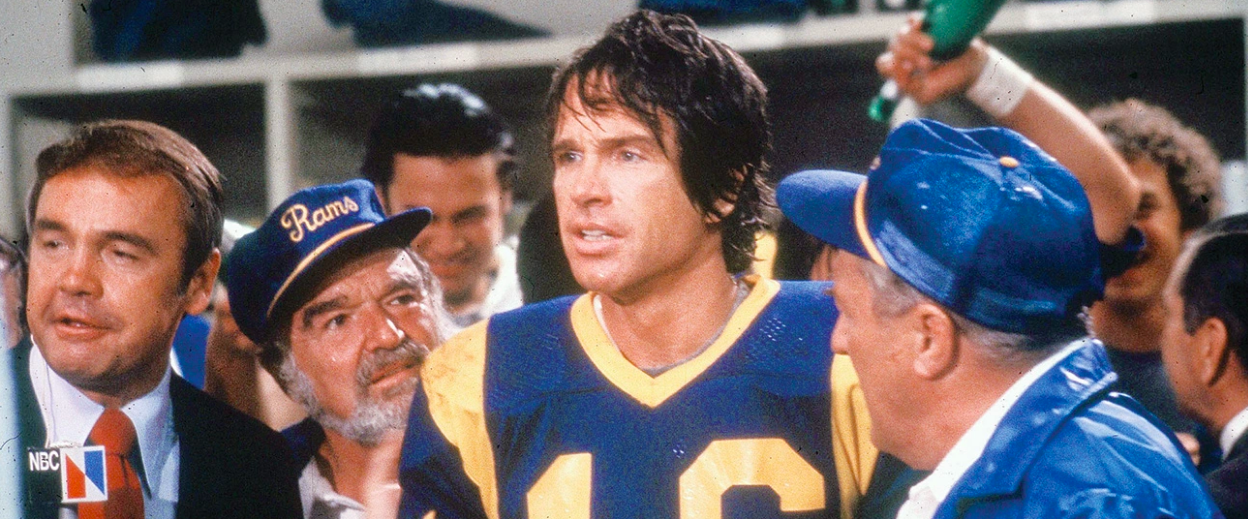
Beatty’s first (co-)directing effort captures his biggest strengths and weaknesses as the writer and/or director of his own work. Beatty clearly has always seen his art as a means of being critical of the conditions of the world and pointing out injustices. That sincerity is nice! Unlike more astute filmmakers though like Robert Altman and Elaine May, Beatty had a tendency of directing himself to being too wholesome and competent. Optimal Beatty works were a combination of his himbo and sincere energy. It always came across in stuff like Heaven Can Wait, Beatty could not resist making himself too talented. Alas. This is still quite fun and solid.
2. Bulworth [1998]

Warren Beatty has always been a filmmaker and a person in general who has been trying to figure out how the world could be better and how his films (that he directed/wrote/starred in/etc) could convey what he is feeling about the world. Bulworth is a really good example of using the medium for what it is meant to do. Combine that with Beatty’s natural self-involvement, himbo, and annoying qualities, and you have something that is just absolutely fascinating.
As a McGovern left-lib, Beatty has always understood that something was fundamentally wrong with the status quo. He manages to create something here that conveys that understanding but is also so caught up in his stardom and self-image that the film never truly reaches that next level. (Also, it is more than notable that Beatty was willing to make a film directly calling out Clinton in ’98 while other long-suffering Hollywood left-libs May/Nichols released Primary Colors which essentially apologized for Clinton with a “We cant really expect to do better than him” message.)
1. Reds [1981]

Reds is both a beautiful and spellbinding film entirely on its own merits while also serving as the ultimate Warren Beatty text. The film captures everything he aspired to be on screen and behind the camera. Beatty used his considerable weight to write, produce, and direct an epic 3+ hour film on the Russian Revolution with the communists as the heroes.
Beatty fundamentally believes in a better world than the one we have made for ourselves. There is a great deal of optimism to Beatty. He can envision individuals and society being much better than they are. It is a key part of what makes him so compelling.
It is both this quality as an artist and on-screen persona that makes the Jack Reed story so pitch perfect for Beatty in every way. He is doing his best to make a better world possible despite any rational reason for cynicism. Beatty’s ego is almost fully unleashed in this role and this film. While his career often saw him trying navigate his massive ego, this seemed to be the one film where he just fully let go and let it be. It makes for a beautiful piece of work.
 The Reel World